
Chimney · 1 min read
Why chimney leaks usually start at the flashing
The joint between a chimney and a roof is one of the hardest places on a house to keep dry. Here's why, and what a lasting repair looks like.
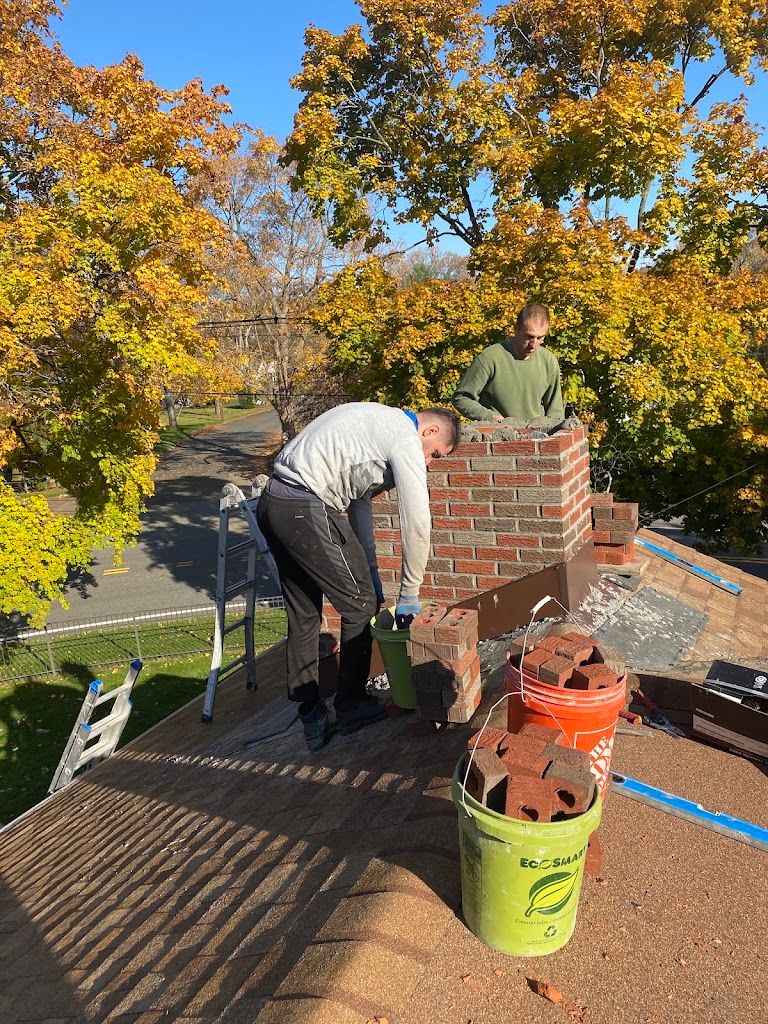
If you have a water stain on the ceiling next to your chimney, the chimney itself may not be the problem. More often, it’s the flashing, the metal that seals the joint between the chimney and the roof.
Why that joint is so hard to keep dry
A roof and a chimney are built differently and move differently. The roof flexes with temperature and settles over time; the masonry doesn’t. Water running down the roof also piles up against the uphill side of the chimney. Flashing has to bridge all of that and stay watertight for years.
When flashing fails, water runs behind it and into the house, often showing up far from the chimney itself.
Signs of failing flashing
- Stains on ceilings or walls beside the chimney, or in the attic
- Flashing that’s bent, rusted or pulling away from the brick
- Old caulk or roofing cement smeared over the joint (a sign of earlier quick fixes)
Why caulk isn’t the fix
Sealant can slow a leak for a season, but it cracks and pulls away as the roof and chimney move. A lasting repair replaces the flashing properly:
- Step flashing woven in with the shingles along the sides of the chimney
- Counter flashing set into the mortar joints of the brick so it overlaps the step flashing
- A properly flashed uphill side so water is directed around the chimney
Check the top of the chimney too
Leaks can also come from above: a cracked crown, a missing cap or porous mortar. That’s why we check the whole chimney, not just the flashing, before recommending a repair.
We repair chimney flashing throughout New Jersey and in our New York counties. In New York, we can repair the roof around the chimney as well.