
Chimney · 1 min read
What a chimney inspection covers (and what it doesn’t)
What we look at during a chimney inspection: crown, cap, masonry and flashing. Plus why an inspection describes condition rather than certifying safety.
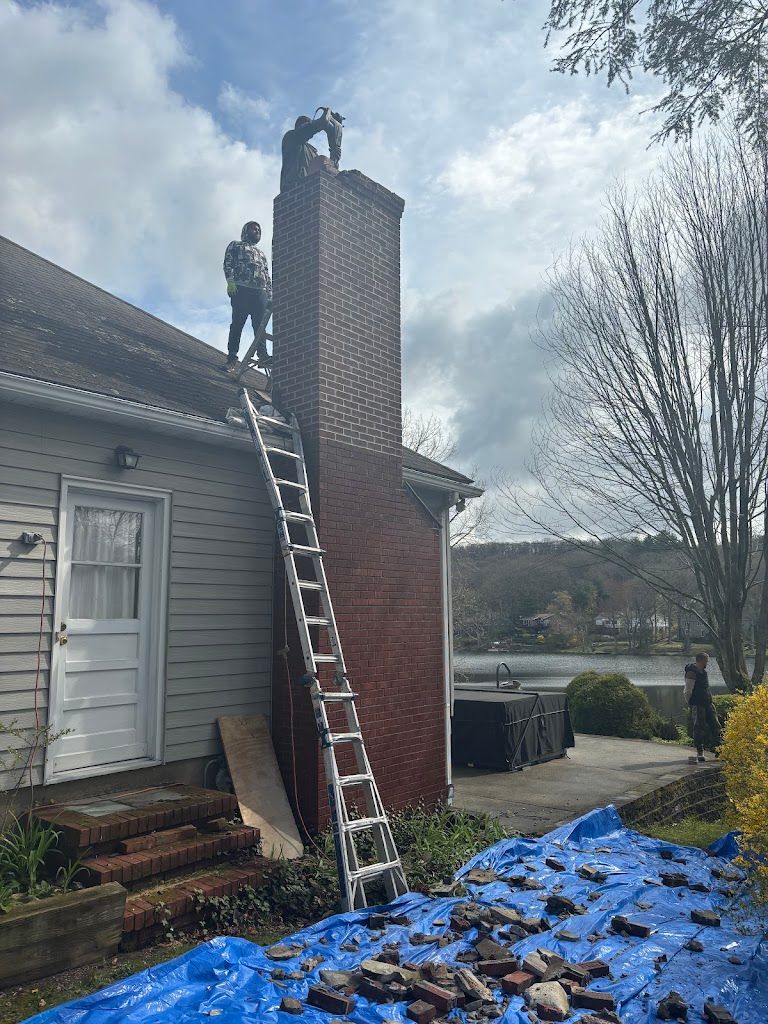
Most chimney problems start out of sight: on top of the chimney, where you can’t see it from the ground, or at the joint where it meets the roof. A chimney inspection is a close look at those areas so small problems can be repaired before they turn into big ones.
What we look at
The crown. The crown is the concrete or mortar top of the chimney. Its job is to shed water. Cracks let water straight down into the masonry, and freeze-thaw cycles make them worse every winter.
The cap. A cap keeps rain, leaves and animals out of the flue. We check that there is one, that it’s secure and that it fits.
Brick and mortar. We look for mortar joints that have worn back or fallen out, and for brick that’s cracked, flaking (spalling) or loose, especially near the top.
Flashing. Where the chimney meets the roof, metal flashing bridges the gap. Failed flashing is one of the most common causes of leaks we see.
Signs of water. White staining on the brick, damp areas, or stains on nearby ceilings and walls point to where water may be getting in.
What an inspection doesn’t do
An inspection describes the condition of the parts of the chimney we examined on that day. It isn’t a certification that a chimney, flue or fireplace is safe to use. If you need a flue or venting evaluation, ask about it when you book and we’ll tell you whether it’s something we cover.
After the inspection
We explain what we found in plain terms: what needs attention now, what can wait, and what a repair would involve. If repairs are needed, the estimate is free and there’s no obligation.
Chimney inspection is available across all of New Jersey and in our New York counties.